
- November 20, 2019
- Posted by: admin
- Category: Blogs

The American Lung Association emphasizes that we should monitor our use of household cleaning products regardless of whether they labeled as “green” or “natural”. This is because many chemicals or combinations of chemicals can be dangerous to the health of people and the environment (1,) for example, volatile organic solvents (VOCs), as well as ammonia or bleach.
Ammonia is a chemical compound containing nitrogen, which is essential to nature, including humans, and is essential for the synthesis of DNA, RNA, and proteins (2). Nitrogen is present in the air, water, and soil but the industrially produced for domestic uses causes undeniable risks to personal health and environment.
Since ancient Roman times ammonia is used, when Pliny described it. In addition, it’s used in the middle ages as a common household chemical for dyeing clothes. Sears Roebuck & Co introduced ammonia introduced as a household product around 1897. However, in those days, ammonia was obtained from fermented urine. In the twentieth century, a group of German scientists artificially synthesized ammonia from nitrogen dissolved in the air and began using it as an explosive. Others have used it as a refrigerant, but its most common use today is as a fertilizer (3)or for household cleaning.
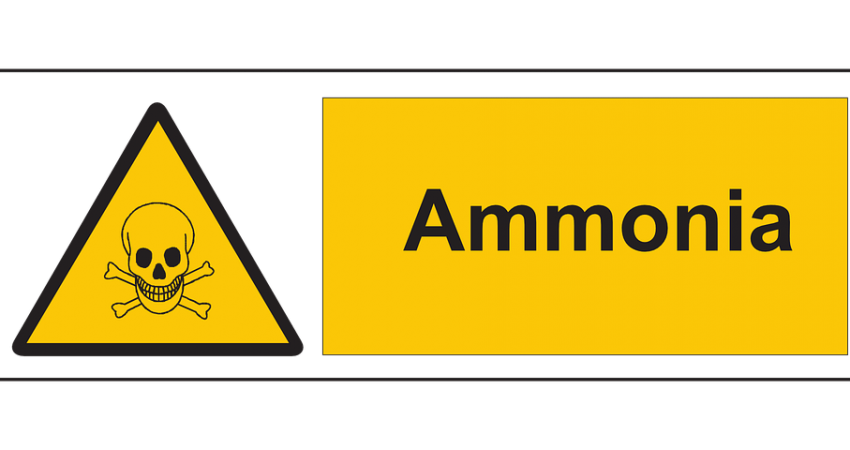
Ammonia is used in industrial plants around the world and is present in many hazardous waste sites, presenting risks to personal health, or the environment. When used in the home, exposure to ammonia increases as the possibility of skin contact, inhalation or accidental ingestion (4).
In fact, ammonia is present in a wide range of products for both industrial, commercial, and domestic use. It is present in sealants, silicone adhesives, glues, wood, flooring, carpets, multi-purpose cleaners, metal polishing liquids, floor waxes, and cleaners for kitchen, bathrooms stain removers, glass cleaners, aromatic salts, among many others (4, 5).
During the 2016-2017 period, in the US alone, hazardous products in the home accounted for 2.7 to 2.12 million calls to poison control centers(6, 7). In many of these cases, cleaning products were the main reason for consultation in both children and adults.
Ammonia for industrial use is usually at a concentration higher than 25%, which makes it corrosive, and for domestic use is dissolved in water and is usually present at 5 to 10% (2, 8). The risk of poisoning will depend mainly on the type of exposure, the age and the concentration of the product. The main toxic effects are restricted to ingestion or inhalation into the body or direct contact with ammonia (2).
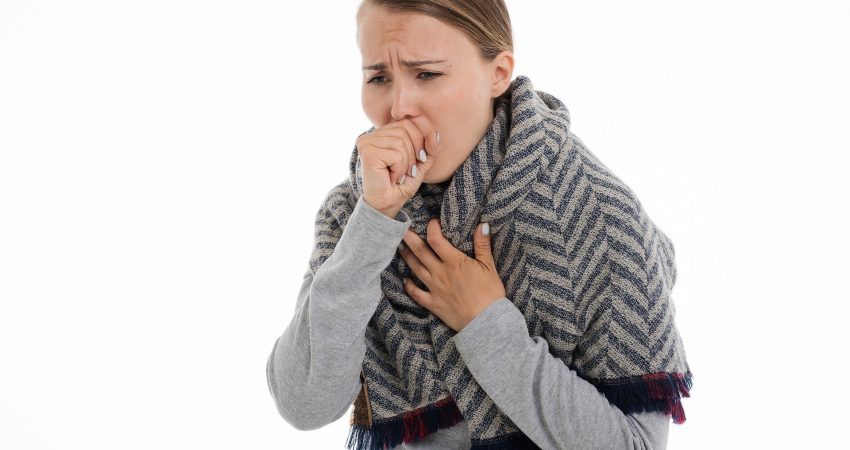
In the case of inhalation, one of the first symptoms seen by the affected person is irritation of the airways, accompanied by cough. If high concentrations of ammonia are present the corrosive effect will cause burns in the nose, throat and upper respiratory tract, and in some cases, bronchiolar and alveolar edema may occur. Signs of respiratory distress appears alongside the destruction of functional tissue. Likewise, must keep in mind that repeated exposure causes a decrease in self-awareness (8).
If the ammonia meets skin or eyes, again the symptoms and signs will depend on the concentration. Ammonia in low concentrations causes eye and skin irritation. At higher concentrations, burns or serious injuries occur. Serious cases could include, skin burns, serious eye injuries, and even blindness. Moreover, in cases of contact with liquefied ammonia, the lesions are associated with frostbite (8).
In the case of ingestion, the concentration of the product dictates the magnitude of the lesion; but at low concentrations, burns of mouth, throat, and stomach are typical but systemic intoxication is uncommon (8).
Other risks associated with ammonia are due to the chemicals physical and chemical properties, for example, the risk of explosion when exposed to heat, as it is a flammable gas (8, 9).
The Agency for Toxic Substances and Disease Registry (ATSDR), in the US, says that there is no evidence to confirm any correlation between ammonia and the development of cancer. Even more, the Agency of Environmental Protection (EPA), the Department of Health and Human Services (DHHS) and the International Agency for Research on Cancer (IARC) do not include it in the list of carcinogens (2). There are no data confirming the possible mutagenic effect of ammonia.
Finally, prevention at home begins with awareness when purchasing cleaning products, as well as reading the recommendations described in the packaging. Mixtures of products or substances that may be incompatible should be avoided (ammonia-bleach, ammonia-vinegar, ammonia-baking soda), and when used at home, the area should be kept well-ventilated while using the product and for a short time afterward to ensure adequate and complete dispersion of the vapors that could be generated. Depending on the product, is highly recommended the use of gloves and safety glasses(2).
To avoid the risk of poisoning in children, use the general recommendation for all types of dangerous products: keeping the product out of reach and if possible, locked up. Where an adult is using a product with ammonia in the presence of a child, the child must be out of the area (2).
References
(1) American Lung Association. Cleaning supplies and household chemicals in Healthy air. Recovered from https://www.lung.org/our-initiatives/healthy-air/indoor/indoor-air-pollutants/cleaning-supplies-household-chem.html. Accessed: October 18, 2019.
(2) Agency for Toxic Substances & Disease Registry. (September 2004). Public Health Statement for Ammonia in Toxic Substances Portal – Ammonia. Recovered from https://www.atsdr.cdc.gov/phs/phs.asp?id=9&tid=2. Accessed: October 18, 2019.
(3) Carroll M. What is household ammonia? In Hunker Recovered from https://www.hunker.com/13420576/what-is-household-ammonia. Accessed: October 18, 2019.
(4) Miley M. (September 18, 2017). Which cleaning products contain ammonia? In Hunker Recovered from https://www.hunker.com/12207552/which-cleaning-products-contain-ammonia. Accessed: October 18, 2019.
(5) U.S. Department of Health & Human Services. (April 2019). Ammonia in Household Products Database. Retrieved from https://hpd.nlm.nih.gov/cgi-bin/household/brands?tbl=chem&id=384. Accessed: October 18, 2019.
(6) National Capital Poison Center. (2017). Poison Statistics National Data 2017 in Poison Control. Recovered from https://www.poison.org/poison-statistics-national. Accessed: October 13, 2019.
(7) American Association of Poison Control Centers. National Poison Data System. In the AAPCC web page. Recovered from https://www.aapcc.org/. Accessed: October 14, 2019.
(8) New York State, Department of Health. (May 2005). The facts about ammonia on the author’s web page. Recovered from https://www.health.ny.gov/environmental/emergency/chemical_terrorism/ammonia_tech.htm. Accessed: October 18, 2019.
(9) Canadian Center for Occupational Health and Safety. (October 18, 2019). Ammonia in OSH Answers Fact Sheets. Recovered from https://www.ccohs.ca/oshanswers/chemicals/chem_profiles/ammonia.html. Accessed: October 18, 2019.