
- July 31, 2019
- Posted by: admin
- Category: Blogs

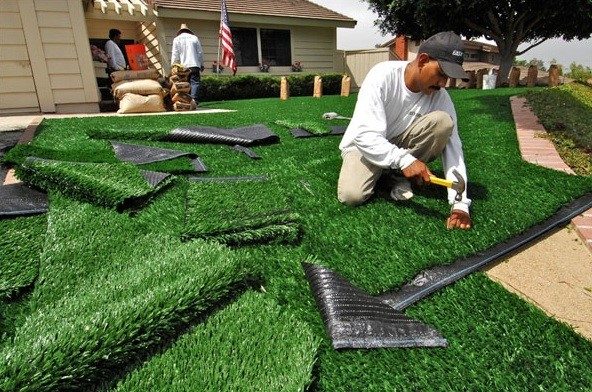
Synthetic turf (or AstroTurf) has recently been in the news again. This is used in many sports fields because it has many benefits over traditional grass. Some of the benefits of artificial turf is that it does not require irrigation or trimming, and it stands up well to heavy foot traffic.
The issue around many types of artificial turf has to do with its components. The layers of grass are composed of silicone-coated fibers that are attached to an expanded polypropylene base by layers of rubber granules, known as the “crumb”. This crumb, that is derived from granulating scrap rubber tires, not only makes the turf weatherproof but also adds shock absorption and traction. Tires are generally a mixture of natural and synthetic rubber e.g. polycyclic aromatic hydrocarbons, carbon black (a carcinogen in the US and listed on the California Proposition 65 list) and other metals such as cadmium, lead and zinc. There are also other chemicals that can be found in artificial turfs, such as the pigments used for the green color of the blades, as well as lead or titanium present in the “white lines”.
Investigation & Research
In 2017, ECHA investigated the health effects of using granulated rubber “crumb” in playgrounds and on sports fields. Although the crumb contains traces of hazardous chemicals, the effects of these on health were determined to be of low concern at that time. Since then, many organizations have completed further research worldwide including the Centers for Disease Control and Prevention (CDC/ATSDR), Consumer Product Safety Commission (CPSC) and the EPA.
The findings from this research consist of 2 reports; one part discusses the results and findings whereas the second part (not released as yet) will focus on characterizing human exposures to chemicals found in the tire crumb mixture. Whilst we do not know the results of this part of the research as yet, we do know that tires contain established carcinogens that pose a health risk if the particles are inhaled, as well as metals such as lead that has neurologic effects if inhaled and ingested.
To read more about this research go to EPA Gov Link.