
- November 28, 2019
- Posted by: admin
- Category: Blogs

ASBESTOS, A THREAT FROM THE PAST OR LATENT DANGER?
Many people think of asbestos exposure as a danger from the past, but even today, it remains a deadly concern for the health of citizens.
The Agency for Toxic Substances and Disease Registry (ATSDR) calls asbestos a group of six different fibrous minerals (amosite, chrysotile, crocidolite, and the fibrous varieties of tremolite, actinolite, and anthophyllite) found naturally in the environment. Asbestos minerals have long fibers that can be separated and are strong and flexible enough to be spun and woven and are heat-resistant. Because of these characteristics, this material has been widely used in a variety of building materials, such as roof coverings, shingles, floor tiles, and more; in addition to having been used in products subjected to friction in automobiles, heat-resistant fabrics, packaging, etc.
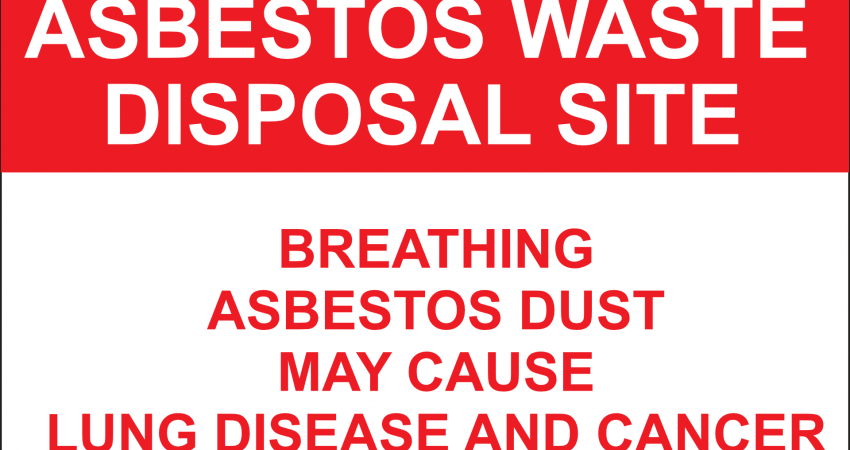
The problem arises with the handling of these materials that can release small asbestos fibers, too small to see, into the air. Workers and others who have been exposed to asbestos fibers for many years have developed diseases directly related to asbestos, including asbestosis, pleural disease, lung cancer, and mesothelioma.
The health hazard information provided by the National Cancer Institute in its publication “Asbestos Exposure and Cancer Risk” shows highly disturbing information, asbestos has been classified as a human carcinogen recognized by the U.S. Department of Health and Human Services (HHS), the Office of Environmental Protection (EPA), and the International Agency for Research on Cancer (IARC). According to IARC, there is sufficient evidence that asbestos causes mesothelioma, lung, laryngeal and ovarian cancers.
Exposure to asbestos may also increase the risk of asbestosis and other non-cancerous pleural and lung disorders, including pleural plaques, pleural thickening, and benign pleural effusions. Although pleural plaques do not precede lung cancer, there is evidence to suggest that people with pleural disease caused by asbestos exposure may have an increased risk of lung cancer.
Do we really have a legal framework that protects us?
Although the human health effects of asbestos exposure are proven to be highly disabling or deadly, and each year, asbestos kills nearly 40,000 Americans, its use remains largely unregulated in the United States.
According to information published by Asbestos.com, since the 1930s, medical evidence already linked asbestos exposure to deadly diseases. In the 1960s, the association between asbestos exposure and cancer was documented. However, it wasn’t until the 1970s that the events were notorious and very difficult to keep hidden from the public.
Because of the effect of this pressure, the U.S. government issued guidelines to limit asbestos exposure trying to protect those affected. Thus came the Clean Air Act of 1970, through which Congress identified asbestos as a dangerous air pollutant. This law was amended over the years and resulted in EPA regulations governing the use and elimination of asbestos.
The law has been followed by other federal measures to protect workers and the public. Examples of other measures include the provisions of the Consumer Product Safety Act and the Occupational Safety and OSHA regulations.
Although asbestos are still used in certain products, its identification as a contaminant has helped reduce its use.
Later, the Toxic Substances Control Act of 1976 (TSCA) was enacted, giving the EPA the power to regulate new commercial chemicals and existing materials that pose unreasonable health or environmental risks, such as asbestos.
The EPA attempted to use this authority in 1989 by banning most asbestos-containing products. It was known as the “Asbestos Ban and Removal Rule”. It would have prohibited the manufacture, import, processing, or distribution of most asbestos products. However, a group of interested companies successfully disputed the standard in court. A 1991 decision by the U.S. Court of Appeals for the Fifth Circuit finally rejected much of the rule. Some products were banned under the EPA rule, but most remained legal.
The federal government develops regulations and recommendations to protect public health. Regulations are developed by EPA, OSHA and FDA, and can be imposed by law. The recommendations provide valuable instructions for protecting public health, but they cannot be enforced by law.
Regulations and recommendations are often expressed as ‘levels not to be exceeded’ in air, water, soil or food and are generally based on levels affecting animals. These levels are then adjusted for the protection of human beings. The federal government has taken a number of measures to protect citizens from asbestos exposure. First, on July 12, 1989, the EPA banned all new use of asbestos. Uses established prior to this date are still permitted. Second, the EPA has established regulations that require schools to investigate the presence of asbestos and, if damaged asbestos is found, eliminate or reduce exposure. Third, the EPA regulates the release of asbestos from factories and during the demolition or renovation of buildings to prevent asbestos from entering the environment.
Some projects have been introduced into Congress seeking to improve compensation for affected workers and claimants, and the ban on importing, manufacturing, processing, or distributing asbestos products, such as the FAIR Act of 2006 and the Asbestos Prohibition in America Act of 2007, but none have been passed into law.
What actions can we take now?
Although progress has been made on the legal framework regulating exposure to these substances, the final step of banning the use of asbestos has not yet been taken.
In 2016, a bipartisan majority in both the House of Representatives and the Senate passed the Lautenberg Chemical Safety Act, removing obstacles such as the cost-benefit analysis that had paralyzed the agency’s asbestos actions. Unfortunately, the EPA is not using the new tools Congress provided to ban asbestos.
The EPA during Trump’s administration began assessing the risks of asbestos, but excluded from consideration important exposure pathways and uses. For example, the agency refused to treat asbestos that remains installed in millions of homes from building materials used in the 1950s, 1960s and 1970s; failed to consider firefighters’ exposure when they enter burning buildings containing asbestos; and ignored the presence of asbestos contamination in children’s products, such as crayons.
In addition, it has been somewhat lax with importers of asbestos-containing products, requiring them to notify the agency before discontinued uses are resumed rather than permanently banning them from entering the United States.
The history of asbestos legislation in the United States is fraught with controversy, cover-ups, and political and corporate interests.
People injured by asbestos have defended their rights; but it has been an uphill battle. Corporate interests continue to influence government policy, and asbestos remains unbanned in the United States.
Congress must do what EPA has not done: consider all the scientific evidence showing the grave danger posed by the continued use of asbestos and must ban it definitively. Passing the Alan Reinstein Asbestos Ban Bill (ARBAN) of 2019 would ban the import and use of asbestos within one year of its enactment. Thousands of lives would be saved and the book on the use of asbestos would be closed forever.